
A guide for parents and carers
Home educating a horse-mad child: a practical guide
If your child would happily talk about horses all day and go quiet the moment a workbook appears, that is not a problem to be solved. It is the most useful thing you have. Here is how home educating families use it — including the many who do not have a horse anywhere near them.
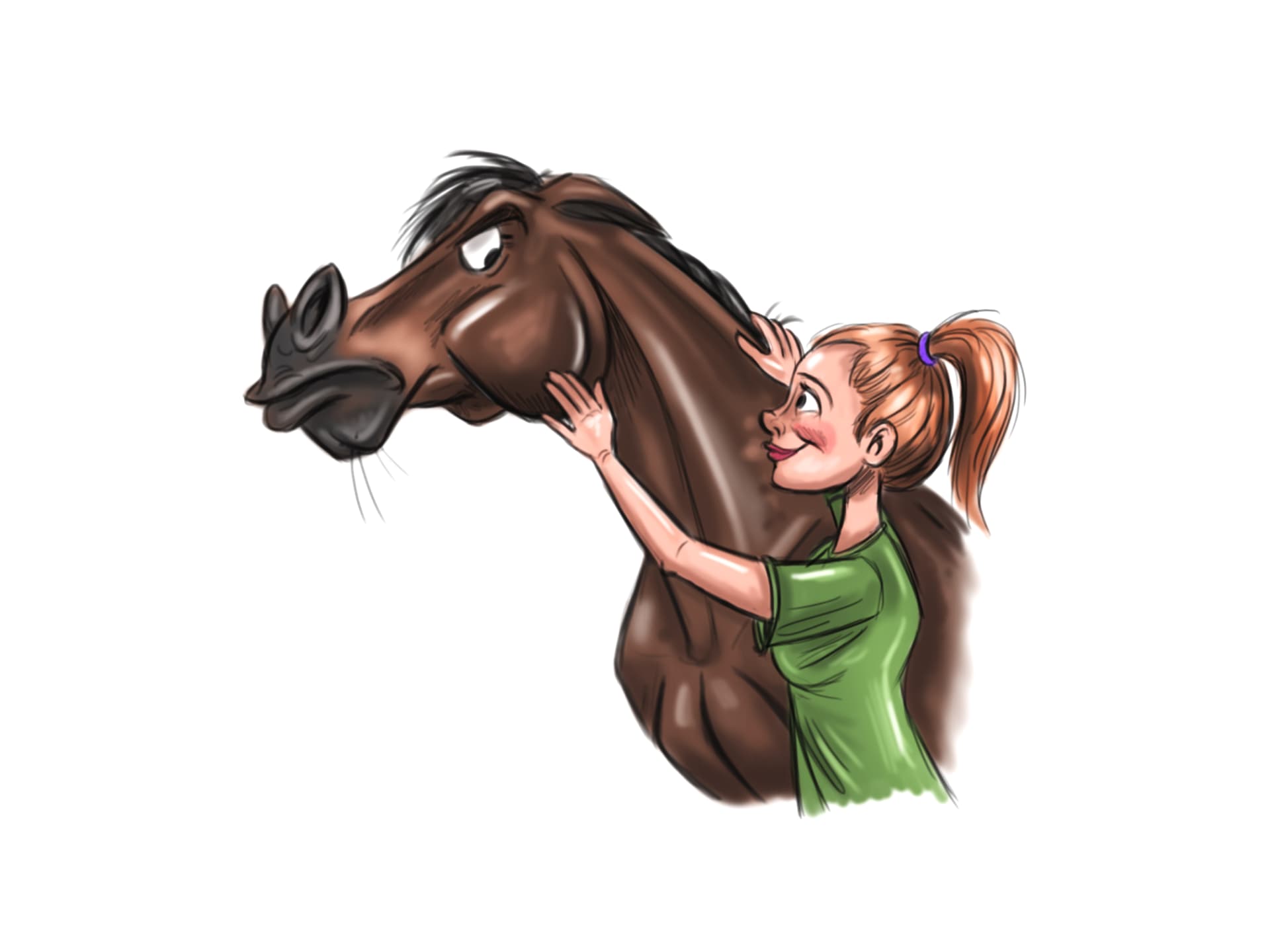
Why an interest is a good place to start
A child who cares about the subject asks better questions, keeps going for longer and remembers more of it afterwards. None of that is a claim about brains — it is simply what most parents notice within a fortnight of following an interest properly.
The worry that usually follows is coverage: if we spend a term on horses, what are we missing? In practice the opposite tends to happen. One yard plan reaches maths, measurement, design, writing and animal welfare in an afternoon, and the child experiences it as one thing rather than five lessons.
Equimotional is designed to sit alongside whatever approach your family has chosen. It is not a complete UK curriculum and does not claim to cover one.
Covering the subjects through horses
Every example below is a real Adventure you can look at, so you can judge the level for yourself rather than take our word for it.
Maths and money
Horses are full of real sums with a reason behind them. Costs that have to add up, measurements taken with a tape rather than copied off a page, plans drawn to scale.
English and writing
The trick with a reluctant writer is usually a real reason to write. An advert has to persuade somebody. A magazine has a deadline. A story has a reader.
Science
Investigations with a proper question at the front and a mess at the end: how a horse sees, why one gateway floods, what happens inside a muck heap.
Geography and history
Maps drawn for a purpose, distances worked out, and the long story of how horses and people ended up living alongside each other.
Design, art and making
Drawing, planning, building and photographing — where a child who thinks with their hands often does their best work.
Wellbeing and talking things through
Horses give a child something outside themselves to think about, which often makes a difficult conversation easier. Horses are partners in that reflection — not therapists, and not a treatment.
When your child will not sit at a table
This is the most common thing families write to us about, and it is rarely about willingness. Four things that tend to help:
Start with the thing, not the paper
If sitting down is the sticking point, don't begin there. Begin with the tape measure, the mixing bowl or the camera. Writing tends to follow an experience far more easily than it leads one.
Let them answer in their own way
Drawing, talking, photographing, building or demonstrating are all real answers. A child who explains something out loud has understood it just as well as one who writes it down.
Keep the finishing line close
One page finished beats six pages abandoned. Break a long activity into pieces that each end in something done.
Protect the interest
If horses are the one thing that still feels safe and enjoyable, be careful about turning it into schoolwork. Keep the tone playful and let them lead where they can.
What a week can actually look like
Not a timetable — a shape. Most families spread one Adventure across a week and let the days move around.
- MondayOpen one Adventure together and read the first page aloud. Nothing else. Let the idea sit.
- TuesdayThe practical bit — measuring, drawing, building, mixing. This is usually the part they remember.
- WednesdaySomewhere to go, even if it's a field with a horse in it over a gate. Take photographs.
- ThursdayThe writing or the working out, now that there's something to write about.
- FridayFinish it, print the certificate, and put the rosette in the cabinet. Ending things properly matters more than people expect.
You do not need a horse
Roughly half the children using Equimotional have no horse to visit. Photographs, illustrations, stories, plans and measurements do the work, and where an activity really does want a live horse there is always another way to do it. Nothing is locked behind owning, loaning or riding.
If you do have access to a yard, the practical extensions are there to use — but they are extras, never the main event.
Keeping a record without turning it into testing
Many families like something to look back on, whether for their own peace of mind or for a conversation with their local authority. Equimotional keeps a visual Learning Journey of what a child has explored, alongside a printable Learning Record listing dates, subjects, skills and saved creations. There is no marking, no score and no assessment — and it makes no claim about curriculum coverage.
Try one before you decide anything
One complete Adventure, free, with no card details. Read it, print it, and see how your child takes to it before you think about membership.
Or read the parent FAQ first — it answers the awkward questions honestly.